The writing and opinions of this blog reflect my personal experience while in Peace Corps Panama and does not represent the opinions of Peace Corps or the U.S. government.
Monday, May 23, 2011
The composting latrine/water catchment
I just really wanted to post a picture of the awesome 67 gallon ferro cement tank that my buddy Tolichi (Luis Gram) and I built to collect water for my house. I've got it piped to my house for a wonderful outdoor shower and a sink faucet.
To the left of the tank is where I compost my poop from a bucket I use. Its pretty exciting stuff I know. I'm trying to promote the bucket latrine for elderly and disabled people in my community and have gone as fare and sticking my nose right up to the bucket vent and taking a big wiff to prove it doesn't smell (which it didn't). Ahh the work of an Environmental Health volunteer.
Some images of me working with the newly formed water committee.
Saturday, May 21, 2011
So my family has left me and yet I still remain in Panama City. After many years of a popping/cracking shoulder blade that has only worsened throughout my time proving myself in my community via manual labor and of course building my house, I am undergoing a bit of physical therapy. I feel a bit guilty being away from my community for so long, but I also want to take care of this problem before it progresses worse. So, I'm trying to embrace this unexpected time in the city as an opportunity to connect with friends and family online and plan out my upcoming projects, without visitors constantly at my door.
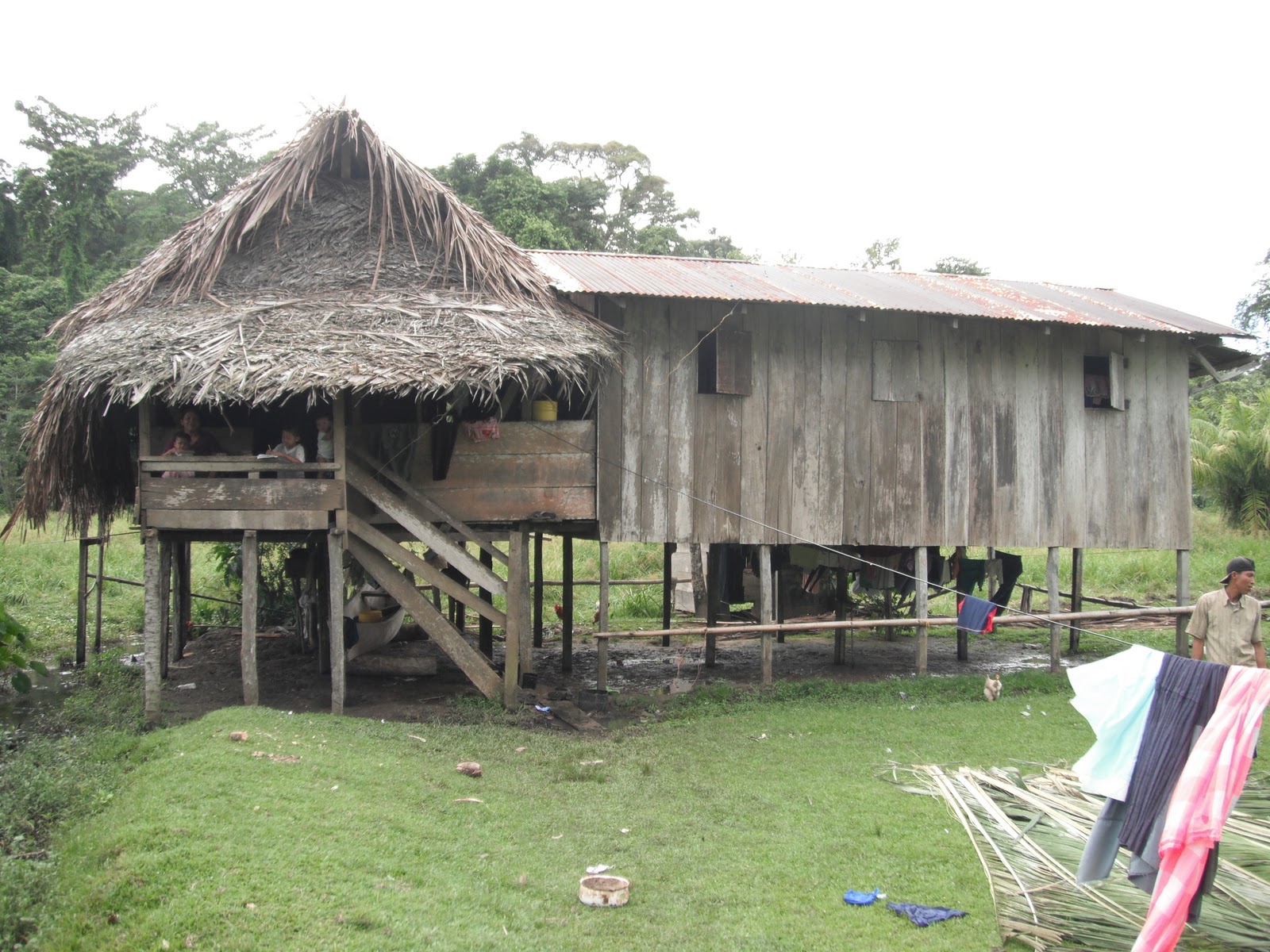
Getting time alone in my site is surprisingly hard to do. You would think otherwise. For god's sake, I live in the middle of nowhere. But what continues to become very clear is that the Ngäbes in my community have an EXTREMELY social culture. During the four days in my site with my lovely parents and sister Nina, we couldn't remember one moment at my house without 10 adults and children sitting on the front porch wanting to interact with us. We were consistently saying goodbye to one group of guests explaining that we were tired or needed some time alone only to hear SILIIII! screamed from vocal chords of the next arriving guest who wanted to come meet the family. It was bit exhausting for all of us. But it was wonderful to share the experience of my everyday life with my family, so they can better understand what I'm going through down here.
It's not to say that I'm undergoing this unimaginably difficult service, but I consistently find it difficult to articulate the challenges that I do have in my community, and like my mother said, you have to experience them first hand. Ultimately one of the most difficult parts of the whole thing is that the people are so generous and excited to interact with you, that its almost impossible to tell the 10 people hanging out on your porch for the last 2 hours that you need some alone time. "Alone time?" This culture has no idea what that even means. As my good friend and fellow volunteer said, "you'll never even see one of our community members in a hammock alone, there is always at least two people in there." And yet, I appreciate my alone time. I need it. I've always been someone who needs to read and write, and do at least a little recharging in silence. So I'll be there, hanging out on my porch or in my house writing a report or doing some reading, and someone from the community comes up to my porch, radio in hand, and most of the time its not even on. But I guess they've come to serenade me. Because they always turn that sucker right on as soon as they arrive onto the porch. In the moment I can get so frustrated, upset that my personal space was just invaded, but as I write this, I do so with a huge smile, chuckling away about the habits of the people I live with and the way our lives have become intertwined. I'm still learning to find that balance between remaining sane and truly giving myself to the community as I came down here to do.
So back to the beginning. My family's stay was such a great experience. We ended up seeing four bright fluorescent turquoise Quetzals in Boquete and went on this amazing coffee tour with 7' tall man named Hans from Holland. We got pretty perfect weather at my site and really throughout the entire trip. At sight we went on a 4-5 roundtrip hike deep into the jungle to a pineapple planation of this medicine man who I love. I was so impressed with my family's willingness and abilities to hike through the depths of the jungle. We played in the water on one of the beaches near me, bought some gorgeous hand woven bags from the women in a nearby community, and as mentioned before, did a lot of visiting. One of my favorite memories is when we got picked up at 5:30 in the morning in this dugout canoe to boat to another community to catch a boat off the peninsula. My mom looked at the boat, slightly frightened and said "no lifejackets?" and my dad and I just looked at her and said "sorry grace no life jackets this time." What a trooper. She just jumped right on and we were off. And while I thought it might make her worry more to know what it takes to get out to my site, she was actually comforted knowing that she had done it and lived to tell the story.
I feel so blessed to have had the love of my life, my parents, and my sister Nina come visit me. And I am so excited that a group of my best buddies from high school and college are coming down in september as well as my sister Laura in February. And I can't wait to come home for christmas to see my baby niece who is yet to enter this world, and of course the rest of my family (especially the mother and father, Nicole and Trav) who sadly and yet so wonderfully will not be able to visit.
Peace Corps still lives and breathes by the three goals set forth by JFK. 1) Providing technical assistance 2)Helping countries outside the United States understand US culture 3)Helping US citizens understand peoples of other countries
I thank you all for helping to promote these goals simply by reading.
Saturday, May 7, 2011
Water Committees, Latrines, and Visitors
You must forgive me for taking so long since my last post. Entering civilization for just a few days after a month in site continually leaves me racing and a bit overwhelmed to communicate with all those I wish to communicate with. Trying to write emails, type up work reports, making and receiving calls back home, and connecting with other Peace Corps volunteers here in Panama left me with no time for a blog last time. I love receiving feedback about my blog though and really appreciate all those who are reading it.
Since my last blog I enjoyed the always wonderful and energizing company of my first visitor Helen Jones. We got to explore beautiful Taboga Island, Bocas and Bastimentos Island, ride on a giant dug out boat with a full grown cow as one of many passengers back to my site, move into my cabin, and then experience the debauchery of carnival. The community loved her visit and have made it very difficult to try and put her out of my mind given that they ask we constantly about her, or point out that the flowers she planted are winning in the growing race to my banana trees. The women were stoked to take her sardine-ing, show her how to make coconut oil, and demonstrate how they make cras (woven bags made from a natural or synthetic fiber). Needless to say, I was a sad little puppy when returning to my site and spending my first nights alone in my cabin.
Remaining busy appears to be the best remedy to missing loved ones so I’ve continued to work on my house, my garden, and begin capacitating a newly formed a water committee about potable water and methods necessary to design and build the aqueduct. The community certainly moves at a different pace than my energy and enthusiasm finds desirable. After returning from in-service-training last month I felt extremely eager to continue with the capacitation trainings. I arrived on a Sunday and tried to program a meeting with the water committee for Thursday. “No, we’re busy Thursday.” “Well how about Friday or Wednesday.” “Na, lets just wait until next Thursday because we picked Thursday for our meeting date and we should stick to it.” So I used the time to write a development plan and work around my house only to find out the following week that the community had planned for the president of the water committee to get merchandise for the store on Thursday. I protested so they changed the date, but nevertheless it made me have to give a little lecture about the importance of this committee.
Community members without tubes shoved in a creek bringing water to their house constantly ask me “when is the water going to arrive, my back hurts from carrying water” trying to complain in the most pathetic of voices so I hurry up with the project. But I try to empathetically explain to them that it’s a process and that now the water committee is just as responsible for the project as I am, and that they should ask those members. But even the water committee has yet to fully internalize that they are just as responsible for the success or failure of the project. And while I remain optimistic about the process of educating the water committee so that they can educate the rest of the committee and do the measurements and studies necessary to plan the gravity fed water system, they are struggling at times to assume such a role. Communities in Panama are never asked to be apart of a project like this. A politician usually hires an engineer from Panama City to come into the community, design and build the aqueduct with no education or feedback, and in a few years the aqueduct becomes damaged and the community doesn’t no a thing about how to fix it. This very thing happened to my community 12 years ago. I think this not only leaves them without water, but also hurts the morale of the community and their prospects for being apart of their own development. Any broken or unused infrastructure project sits there as a reminder that the community can’t develop and that they remain trapped in poverty. But if I can show them how to design the system, ask them to make some of the most important decisions about the project, have them build it, and teach them how to maintain it, then when I’m gone and a problem arrases, they wont have to wait another 12 years for someone to come along and try and fix it. It’s a slow process though and I’m starting from the very basics, teaching about water-shed management, the water cycle, contaminants, all while teaching about measuring flow, measure height differences between potential sources, tank locations, and homes, and then distances between these.
And then after we have the entire design ready the next stage will be soliciting for funds. It looks plausible that a local water and sanitation representative might be able to donate some of the tubes, but I’ll believe it when I see it. Most of the funds however will come from a funding source called Peace Corps Partnership Project (PCPP), where theoretically anybody scanning the web could read my (not yet written) proposal and donate to my project, but more than likely will come from friends, family, church groups, returned Peace Corps volunteers, or any other organizations that I email in search of funds. Then on top of that Peace Corps Panama has a strong relationship with two organizations that donate up to half of the funds received from the PCPP.
On top of the water project I’m also gearing up to start educating about the importance of latrines and hoping to build a pilot latrine project. I want to build just one composting latrine and have families take turns using it and providing me with feedback about whether they could actually see themselves using and maintaining it if we built one beside their home. Too often in the past Peace Corps Volunteers have built latrines in communities only to see them unused or never fully finished because Ngabes are simply much more comfortable pooping in the creek. Like mentioned earlier, I think it is a greater disservice to have unused latrines sitting in a community than none at all. So I’m not going to be twisting anybody’s arm to build a latrine next to his or her home. Those who remain committed after the pilot project will have to attend mandatory meetings and put a small financial deposit down before construction of latrines will begin.
Currently my sister Nina and my parents are here visiting (amazing!). After visiting the Panama Canal and enjoying many delicious meals in the city as mom tries to put those 15 pounds I’ve lost back on my, we enjoyed the relaxed rhythm of Las Lajas Beach Resort and are now currently in Boquete. After exploring the host springs, going on a coffee tour, and search for the elusive Quetzal we will take off for my site where I’m eager for my parents and Nina to see my daily life in Panama, the cabin I am oh so proud of, and meet my sweet community members. Hopefully we’ll get some good weather and be able to enjoy the great snorkeling I’ve discovered right in front of my house (where I will soon be honing my spear fishing skills), do some bird watching in the jungle, and eat some delicious michila maduro (ripe boiled and smashed bananas will coconut milk). We’re also discussing brining seeds to start a campaign to integrate more nutritious vegetables into the local diet after I figure out what grows well there and maybe some egg laying chickens which I’ve been promising to the local store so they can sell their own eggs rather than bringing them for Chirique Grande.
Saturday, February 12, 2011
In the City
Panama has the second highest income inequality in Latin America (Brazil taking the lead), and its not hard to fathom why when faced with the stark contrast of campo and city life. Driving through middle and upper class neighborhoods on my way to the Peace Corps office yesterday made me reflect on the concept of development. The haves and the have nots. The two faces of Panama (stealing a phrase from Carlos Fuentes` description of Mexico). Even going to visit my original host family in Rio Congo near Chorrera I was amazed by how much my perspective of wealth has changed. I remember when I first got to Rio Congo and considered the homes humble and honestly quite dirty. I thought the food was largely boring and complained of being overfed rice. Visiting this time however I felt like I was entering mansions and eating like a king, so excited to be eating rice instead of name. It is no wonder that volunteers often have a difficult time readjusting to the United States after living among such impoverished communities. However, I think to some degree Peace Corps Panama volunteers (or any volunteer where inequality within country is so prevalent) might be able to weather the adjustment back to the states better, having already dealt with some of the contrasts of wealth and privilege in country. I saw a porche yesterday, I´m currently surrounded by skyscrapers, and everybody is walking around with Bluetooth headsets and blackberries.
My community always asks me if everybody is rich in the United States (or simply states it) because that is the main image they take away from movies and the tourists on Bocas Island. Similarly, as I discussed with Helen last night (who by the way is arriving today at 3 and I can´t contain my excitement, nor sleep) it seems that many Americans have a much skewed view of the wealth within Panama. I myself used to visualize only the canal and the cityscape when envisioning this country. But now I have seen the other face, the extreme poverty of rural communities battling easily treatable illnesses and living off of the $100 every two months they are given by the government. I have become so enmeshed in the microcosm of my community and small scale grassroots development that being in the city allows my to reflect on the larger picture. Many times I am frustrated by my community´s inability to plan for the future, to make that $100 last longer than a week, to take their development into their own hands rather than wait for a government handout, and while of course I still feel strongly about those statements, one can´t help but feel that communities like mine should be provided with much more assistance when contrasted against the wealth of the city. But to be truthful I think the majority of that development really is best fitting in the form of education and capacity building (even if I simply sound like I´m preaching peace corps development mantra). But really I´m drawing on so many minds, Amartya Sen, Easterly, Wolf, Sachs, all development economists understand the importance of "human capital." The government`s role is not to provide everything, but rather to nurture an environment that allows individuals to succeed. But that undoubtedly requires a strong educational system.
Peace Corps Panama warns us that many of our communities will have little to know critical thinking experience, and while I thought that came off as quite patronizing, I ran into just that problem as I tried to discuss the strengths and weaknesses of the community at a community meeting the other day. It was like pulling teeth to get the community to discuss the things they like about their community and the things that could use improvement. In the end they were really just ready for my boss and I to say, well we´re going to build a bunch of latrines and a new water system for you. And although I thought the "a gringo but a poor gringo" message had gone over so well and my community understood Peace Corps` approach better than before, they still expected that they would get gifted a project and not have to do anything to get it. My boss Tim and I discussed Peace Corps` approach from every angle possible, and while again I ultimately came away feeling like they better understand Peace Corps` philosophy now, it’s obvious now that repetition and patience will be required throughout the next two years and most likely for the next volunteer in my site. But I have high hopes that my community can come together and work to make their community embody their realized or not yet quite realized dreams.
I would love any questions or critiques you might have about the post.
My community always asks me if everybody is rich in the United States (or simply states it) because that is the main image they take away from movies and the tourists on Bocas Island. Similarly, as I discussed with Helen last night (who by the way is arriving today at 3 and I can´t contain my excitement, nor sleep) it seems that many Americans have a much skewed view of the wealth within Panama. I myself used to visualize only the canal and the cityscape when envisioning this country. But now I have seen the other face, the extreme poverty of rural communities battling easily treatable illnesses and living off of the $100 every two months they are given by the government. I have become so enmeshed in the microcosm of my community and small scale grassroots development that being in the city allows my to reflect on the larger picture. Many times I am frustrated by my community´s inability to plan for the future, to make that $100 last longer than a week, to take their development into their own hands rather than wait for a government handout, and while of course I still feel strongly about those statements, one can´t help but feel that communities like mine should be provided with much more assistance when contrasted against the wealth of the city. But to be truthful I think the majority of that development really is best fitting in the form of education and capacity building (even if I simply sound like I´m preaching peace corps development mantra). But really I´m drawing on so many minds, Amartya Sen, Easterly, Wolf, Sachs, all development economists understand the importance of "human capital." The government`s role is not to provide everything, but rather to nurture an environment that allows individuals to succeed. But that undoubtedly requires a strong educational system.
Peace Corps Panama warns us that many of our communities will have little to know critical thinking experience, and while I thought that came off as quite patronizing, I ran into just that problem as I tried to discuss the strengths and weaknesses of the community at a community meeting the other day. It was like pulling teeth to get the community to discuss the things they like about their community and the things that could use improvement. In the end they were really just ready for my boss and I to say, well we´re going to build a bunch of latrines and a new water system for you. And although I thought the "a gringo but a poor gringo" message had gone over so well and my community understood Peace Corps` approach better than before, they still expected that they would get gifted a project and not have to do anything to get it. My boss Tim and I discussed Peace Corps` approach from every angle possible, and while again I ultimately came away feeling like they better understand Peace Corps` philosophy now, it’s obvious now that repetition and patience will be required throughout the next two years and most likely for the next volunteer in my site. But I have high hopes that my community can come together and work to make their community embody their realized or not yet quite realized dreams.
I would love any questions or critiques you might have about the post.
Thursday, January 27, 2011
A Gringo but a Poor Gringo
Currently I sit in Changinola awaiting my regional meeting with the other 30 volunteers within the Bocas Del Toro area. Sadly today we will hear from the Peace Corps Panama director about how we will not be able to continue with our desired growth plan for Peace Corps Panama given that the budget has not passed yet. Peace Corps Washington has asked all agencies to scale back their growth plans in fear that we will not get the budget increase we were hoping for. In effect, our Community Economic Development program is getting slashed and the intended implementation of a Youth Development program is not going forward.
Yesterday we did agency visits to get acquainted with potential stakeholders that we could work with throughout our projects with our communities. I continually questioned different agencies about whether they worked in the area of my site location. Playa Balsa sits in a difficult location. Geographically considered in Bocas Del Toro, but politically apart of the Comarca Ngabe-Bugle. It would seem that we should work more with the Comarca Ngabe-Bugle whose headquarters are in San Felix on the Chirique side, but given our distance, they most likely don't even know my community exists. Which is part of my role as a volunteer, trying to get my community more agency recognition.
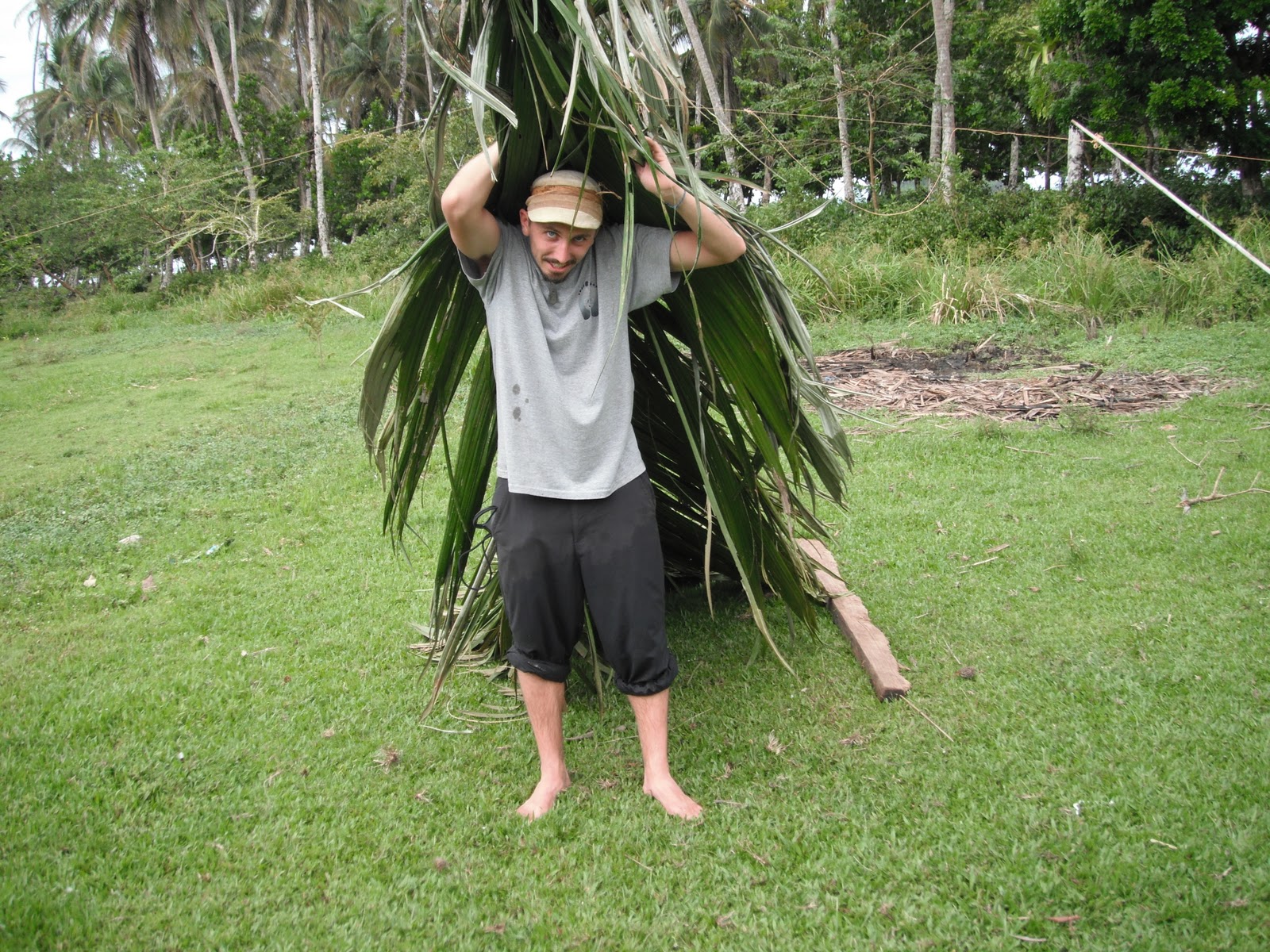
I have now been in my site for three months and have come to the end of the reserved period of Proyecto Amistad (Project Friendship). I have visited every house multiple times, hauled lots of heavy vegetable bags, thatch roofing, and firewood (engaging in back breaking labor seems to have earned me the most respect among the community), and had three interactive community meetings (consisting of a community map, seasonal caledar, and daily activity schedules). I will present all that I have learned about the community on February 1st with my APCD (Associate Peace Corps Director aka Boss) present and engage my community in activities intended to prioritize their desires for the community. It seems clear that they will express wanting a better water system as the first project. But while the communities we work with consistently see the actual infrastructure as our biggest contribution to their communities, we consistently try to promote our lead role as capacity development and education. Pushing the health side of our assignment while recognizing that the infrastructure will ultimately be my legacy.
Most of time over these last weeks have been dedicated toward working on my home. Its been a struggle to understand and feel comfortable with the workparty culture in my community. I have struggled with the sense of entitlement my community members have in relation to workparties. Nobody will work unless they know there will be food, and everybody is always asking what kind of meat will be bought for the occasion. Looking back on my first month in site I remeber now that one work party never happend because nobody had bought meat for the occasion.
My supposed counterpart has been less than helpful in planning work parties at times. He always just asks me "You bring the money" in the wari-wari english that I barely understand. When I asked him what kind of meat I should buy for the work party he told me I should slaughter a cow. He was being slightly sarcastic, but I think he was hoping I would jump on the idea. So, I continue to struggle with trying to convey that I am not a rich American. I gave a very successful speech the other day about this. I explained that I am a Peace Corps VOLUNTEER, that I have left all options of making money behind in the United States and have chosen to serve this community for the next two years with only enough money to get by. I told them that unlike the government projects they are used to, the Peace Corps comes with no money. That I am not a financial resource but rather a human resource. I come educated and capacitated to look for funds for future projects from potentially all around the world, but that we will seek this together. And amazingly I think this speech really worked. Two nights later my counterpart started talking about how I am a gringo, but a poor gringo. Which really just reinforces my understanding that they have equated gringo with rich. So I hope that this struggle will lessen as I continue to articulate what my role as a volunteer is and bust their misconceptions of Americans.
My home is coming along nicely and I´m working hard to have it ready for Helen´s visit on February 12th. I have the panka roof almost entirely done and am hoping that my woodcutter has finished cutting the wood for the walls, so that "all we need to do" is haul it out of the forest and nail it up. Of course I will still need to hold multiple juntas (workparties) that require making food as the incentive for the men to come. Which I´ve become much more comfortable with after another volunteer and I discussed that helping out with manual labor like this is a day lost to look for food for the family and themselves, and thus, they need food in compensation.
I look so forward to having my own space after 6 months of host families. Being able to cook for myself and have some privacy. When I stand on my new floor and look out at the ocean I feel so content and excited, and I believe this private space will be a wonderful contribution to my effectiveness with the rest of my service. Once my house is done, its all forces ahead to work with the community on what I´m really here to do (improve and educate about water and sanitation).
On an exciting note I helped haul a boat out of the jungle the other day. Incredible! These boats they make here are just hollowed out tree trunks. They weigh a ton and we hauled this one up a huge hill and back down with about 10 people. Enjoying lots of chicha along the way and a dinner at the end (the junta incentive). I can´t believe how much that puppy weighed and it was just a little boat. Sometimes they haul out huge one´s with 40 people.
I can´t get images to load on here so please check out facebook!
Yesterday we did agency visits to get acquainted with potential stakeholders that we could work with throughout our projects with our communities. I continually questioned different agencies about whether they worked in the area of my site location. Playa Balsa sits in a difficult location. Geographically considered in Bocas Del Toro, but politically apart of the Comarca Ngabe-Bugle. It would seem that we should work more with the Comarca Ngabe-Bugle whose headquarters are in San Felix on the Chirique side, but given our distance, they most likely don't even know my community exists. Which is part of my role as a volunteer, trying to get my community more agency recognition.
I have now been in my site for three months and have come to the end of the reserved period of Proyecto Amistad (Project Friendship). I have visited every house multiple times, hauled lots of heavy vegetable bags, thatch roofing, and firewood (engaging in back breaking labor seems to have earned me the most respect among the community), and had three interactive community meetings (consisting of a community map, seasonal caledar, and daily activity schedules). I will present all that I have learned about the community on February 1st with my APCD (Associate Peace Corps Director aka Boss) present and engage my community in activities intended to prioritize their desires for the community. It seems clear that they will express wanting a better water system as the first project. But while the communities we work with consistently see the actual infrastructure as our biggest contribution to their communities, we consistently try to promote our lead role as capacity development and education. Pushing the health side of our assignment while recognizing that the infrastructure will ultimately be my legacy.
Most of time over these last weeks have been dedicated toward working on my home. Its been a struggle to understand and feel comfortable with the workparty culture in my community. I have struggled with the sense of entitlement my community members have in relation to workparties. Nobody will work unless they know there will be food, and everybody is always asking what kind of meat will be bought for the occasion. Looking back on my first month in site I remeber now that one work party never happend because nobody had bought meat for the occasion.
My supposed counterpart has been less than helpful in planning work parties at times. He always just asks me "You bring the money" in the wari-wari english that I barely understand. When I asked him what kind of meat I should buy for the work party he told me I should slaughter a cow. He was being slightly sarcastic, but I think he was hoping I would jump on the idea. So, I continue to struggle with trying to convey that I am not a rich American. I gave a very successful speech the other day about this. I explained that I am a Peace Corps VOLUNTEER, that I have left all options of making money behind in the United States and have chosen to serve this community for the next two years with only enough money to get by. I told them that unlike the government projects they are used to, the Peace Corps comes with no money. That I am not a financial resource but rather a human resource. I come educated and capacitated to look for funds for future projects from potentially all around the world, but that we will seek this together. And amazingly I think this speech really worked. Two nights later my counterpart started talking about how I am a gringo, but a poor gringo. Which really just reinforces my understanding that they have equated gringo with rich. So I hope that this struggle will lessen as I continue to articulate what my role as a volunteer is and bust their misconceptions of Americans.
My home is coming along nicely and I´m working hard to have it ready for Helen´s visit on February 12th. I have the panka roof almost entirely done and am hoping that my woodcutter has finished cutting the wood for the walls, so that "all we need to do" is haul it out of the forest and nail it up. Of course I will still need to hold multiple juntas (workparties) that require making food as the incentive for the men to come. Which I´ve become much more comfortable with after another volunteer and I discussed that helping out with manual labor like this is a day lost to look for food for the family and themselves, and thus, they need food in compensation.
I look so forward to having my own space after 6 months of host families. Being able to cook for myself and have some privacy. When I stand on my new floor and look out at the ocean I feel so content and excited, and I believe this private space will be a wonderful contribution to my effectiveness with the rest of my service. Once my house is done, its all forces ahead to work with the community on what I´m really here to do (improve and educate about water and sanitation).
On an exciting note I helped haul a boat out of the jungle the other day. Incredible! These boats they make here are just hollowed out tree trunks. They weigh a ton and we hauled this one up a huge hill and back down with about 10 people. Enjoying lots of chicha along the way and a dinner at the end (the junta incentive). I can´t believe how much that puppy weighed and it was just a little boat. Sometimes they haul out huge one´s with 40 people.
I can´t get images to load on here so please check out facebook!
Monday, January 3, 2011
5 Week Stretch
I´m currently out of site after a five week stretch there. I must say I think it was at least one week two long. A lot of volunteers get out at least for the day to internet or a grocery store every two weeks, but I think three weeks is the ideal. By the time I met up with my friends I was so ready and so happy to see them. To have people to relate to, to process with, and to vent to. Being so cut off from my family and friends, with cell phone reception a hour walk away, and the added difficulty of having enough minutes and battery to talk, makes my site both a blessing and a curse. It´s a very unique and humbleing experience to live so cut off from the world. There is constant moments for reflection, hamaca, and getting closer with my community. But it also must be balanced with my own personal sanity. Which I realize now will require shorter stretches of time in my site without leaving, and more communication via phone. I´m going to try and check my messages once a week so if you wish to leave a message please call 6487-6131. I think this phone number is going to become my primary phone now so please try to reach me there.
My time in site has been very productive and intense. I came back from Thanks Giving after a spout of Giardia and moved into another host family´s home. So for the month of December I was living with one of four community members who actually has a consistent income outside of welfare. It´s a stark difference and only after having the ability to compare December with November was I able to realize just how difficult November had been. Rather than ñame three times a day, I was getting a fried egg with fried bread (oholdra) for breakfast, multiple vegetables for lunch and dinner (though still always too much starch because all vegetables are tubers), and often fish or chicken´s neck or beef. Its funny how chicken´s neck has become a delicacy for me down here so quickly. I had a door with a lock on it, and a wooden bed built off the ground to protect me from the cockroaches-all things I did not have before. I learned to simply pay $10 per week rather than come accross the difficulty I had last month after providing food. And with this arrangement I felt more inclined to buy chicken neck or eggs throughout the month as an extra little gift, rather than being constantly asked for more money-I was able to provide more by choice rather than awkward obligation. I enjoyed nightly cuentas historicas about the jackrabbit tricking the tiger or of the dog, how dogs became man´s best friend, how a dolphin saved a man by taking him on a ride on his back passed out over the course of three days. Many stories my host father asked me to believe without doubting his word, no matter how impossible they sounded. He is a great story teller though and a skilled wood cutter.
I have been accompanying my host father of this month into the jungle to cut the wood for my house. I must say that I fear my house will at least result in 4 large fallen trees to be molded into lumber by Julian´s chainsaw, and then hauled out of the jungle by my community members only with the incentive of coffee and Johney Cakes (bread baked with coconut milk) as reward. Its hard to have every element of help I need for my house require some food offering, but that is simply the culture here. And the work they are doing, I can contest is extremely difficult because I am always right beside them experiencing it first hand.
One of my tougher moments over these weeks occured on Christmas day as I walked through a small town on my way to cell phone reception already feeling homesick and lonely. I saw the casique (chief with very little modern political power) and asked him how he was doing. He said fine but that his kid was sick with a hernia and yellow fever. That the doctor had told him he needed to go to David to get him help but the man explained that there was no money to achieve this. I saw his son sitting there uncomfortable and with the white´s of his eyes yellow and struggled with what I could say, do, or advise. I talked to the dad about how a kid had died in his community 3 months before and how he really needed to do what he could to get his son help. He told me more stories of others who had died from not getting to the doctor and then explained that the health worker he had seen for his son had also recommended candy in exchange for getting him help in David. And over the last week I have tried to explain to him that the candy recommendation was second to real medical help, but he continues to buy candy claiming that its all he can do. In some ways I already find myself becoming slightly aclimated to events such as these. Knowing that I cannot be the one to lend or give the money, nor force kids to wash their hands after pooping, there is a part of me that looks at the state of these people and echos their claim of "this is just how it is." But when I take a step back and explain what I just saw to family or friends, or process these moments with other volunteers it becomes so evident how horrific much of what we are seeing is. That things should not be this way and that change must come. After talking to my mother and reading I believe that this boy did not have yellow fever but more likely Hep A after poop to mouth contamination. Which yet again proves the importance of proper sanitation and hygiene. When I left the family said the boy was getting a little better and I have tried to provide whatever advice I can from my where there is no doctor medical reference book, and will continue to check in on him.
Favorite moment over my entire time living in Playa Balsa was when I went to the finca to harvest with my host brother and sister and met a medical man deep in the jungle who was working on his pineapple plantation. When he saw me he immediately began beaming and smileing largely, signaling for us to come to his home. There his wife worked on making michila (cooked mashed ripe bananas of some sort with coconuut milk). They gave us all michila, me with the largest, drinking from the gord. Everything my host brother explained to me from how Ngabes used to only drink and eat from gords as plates, bowls, and cups, or that the michila was made from maduro platanos cuadrados the husband and wife would immidiately hand me as a gift. " Take this gord, here take these platanos cuadrados, this yampi (purple root vegetable). He showed me what each plant could be used for that were planted around the house and explained to me that he used to live out here before a family member´s baby died out there three years before. So he moved closer into "town." They were the sweetest peoiple and that night I wrote in my journal that if ever I question humanity to remeber the generosity and kindness of these two. It was a beautiful day.
Making Johney Cakes for Mother's Day ![]() |
| Frame of my home |
My time in site has been very productive and intense. I came back from Thanks Giving after a spout of Giardia and moved into another host family´s home. So for the month of December I was living with one of four community members who actually has a consistent income outside of welfare. It´s a stark difference and only after having the ability to compare December with November was I able to realize just how difficult November had been. Rather than ñame three times a day, I was getting a fried egg with fried bread (oholdra) for breakfast, multiple vegetables for lunch and dinner (though still always too much starch because all vegetables are tubers), and often fish or chicken´s neck or beef. Its funny how chicken´s neck has become a delicacy for me down here so quickly. I had a door with a lock on it, and a wooden bed built off the ground to protect me from the cockroaches-all things I did not have before. I learned to simply pay $10 per week rather than come accross the difficulty I had last month after providing food. And with this arrangement I felt more inclined to buy chicken neck or eggs throughout the month as an extra little gift, rather than being constantly asked for more money-I was able to provide more by choice rather than awkward obligation. I enjoyed nightly cuentas historicas about the jackrabbit tricking the tiger or of the dog, how dogs became man´s best friend, how a dolphin saved a man by taking him on a ride on his back passed out over the course of three days. Many stories my host father asked me to believe without doubting his word, no matter how impossible they sounded. He is a great story teller though and a skilled wood cutter.
![]() |
| Hauling a 16 foot 4x4 |
![]() |
| That chainsaw will cut every board of my house |
One of my tougher moments over these weeks occured on Christmas day as I walked through a small town on my way to cell phone reception already feeling homesick and lonely. I saw the casique (chief with very little modern political power) and asked him how he was doing. He said fine but that his kid was sick with a hernia and yellow fever. That the doctor had told him he needed to go to David to get him help but the man explained that there was no money to achieve this. I saw his son sitting there uncomfortable and with the white´s of his eyes yellow and struggled with what I could say, do, or advise. I talked to the dad about how a kid had died in his community 3 months before and how he really needed to do what he could to get his son help. He told me more stories of others who had died from not getting to the doctor and then explained that the health worker he had seen for his son had also recommended candy in exchange for getting him help in David. And over the last week I have tried to explain to him that the candy recommendation was second to real medical help, but he continues to buy candy claiming that its all he can do. In some ways I already find myself becoming slightly aclimated to events such as these. Knowing that I cannot be the one to lend or give the money, nor force kids to wash their hands after pooping, there is a part of me that looks at the state of these people and echos their claim of "this is just how it is." But when I take a step back and explain what I just saw to family or friends, or process these moments with other volunteers it becomes so evident how horrific much of what we are seeing is. That things should not be this way and that change must come. After talking to my mother and reading I believe that this boy did not have yellow fever but more likely Hep A after poop to mouth contamination. Which yet again proves the importance of proper sanitation and hygiene. When I left the family said the boy was getting a little better and I have tried to provide whatever advice I can from my where there is no doctor medical reference book, and will continue to check in on him.
Favorite moment over my entire time living in Playa Balsa was when I went to the finca to harvest with my host brother and sister and met a medical man deep in the jungle who was working on his pineapple plantation. When he saw me he immediately began beaming and smileing largely, signaling for us to come to his home. There his wife worked on making michila (cooked mashed ripe bananas of some sort with coconuut milk). They gave us all michila, me with the largest, drinking from the gord. Everything my host brother explained to me from how Ngabes used to only drink and eat from gords as plates, bowls, and cups, or that the michila was made from maduro platanos cuadrados the husband and wife would immidiately hand me as a gift. " Take this gord, here take these platanos cuadrados, this yampi (purple root vegetable). He showed me what each plant could be used for that were planted around the house and explained to me that he used to live out here before a family member´s baby died out there three years before. So he moved closer into "town." They were the sweetest peoiple and that night I wrote in my journal that if ever I question humanity to remeber the generosity and kindness of these two. It was a beautiful day.
![]() |
| Making Michila Women's Map |
Friday, November 26, 2010
Challenges and Successes
My December Home
Little Cutie
Hauling Panka
Swear in was an amazing experience and President Martinelli actually gave a very genuine speech on the spot. The days after were spent on the beach trying to soak up my peers´ presence before separation, and perhaps led to my immune system taking a beating (more on that soon). For some reason I decided to punish myself upon entering my site and rather than getting a boat ride directly to my site I decided to get dropped off at La Ensenada because I knew that I would be using that comunidad to leave my peninsula and thought I should learn the trail. Bad idea! With three large bags containing groceries and my possessions I ventured through an extremely muddy path laden with a few boards to tight rope walk in an effort to not have mud up to your thigh. My tight rope walking skills were not nearly developed enough to not find myself constantly stuck in the mud trying to get my chacos up an out of the mud without dropping the three bags. But soon I heard the ocean and found myself half way there before having to cross another similar stretch. By the time I got to my new home I was covered in mud, tired and not feeling too hot. I entered the home to find a visitor from another community there aggressively flirting with me as I slumped against the wall, halfway lying on the floor, not wanting to do anything other than sleep. This feeling remained for next two weeks as I was hit with an intense cold as it rained consecutively for a week straight. Three days into site I developed an ear infection that is still giving me trouble and resulted in me having to leave site two weeks in to go to David (a six hour one way travel endeavor) for better medicine than my centro de salud could offer. Being so remote makes it difficult to want to leave but it was a good lesson that I need to be a little less stubborn and take better care of my health.
But throughout these three weeks I´ve been able to have some truly incredible experiences and earned some people´s initial respect by doing manual labor and pasearing (visiting houses). Whether it is carrying panka as the ocean pounds against me and trys to take me away, working in the finca, or carrying firewood through what feels like unbearable distances at the time, I´ve come to learn the incredible strength of my community. Each time after hauling panka or firewood, I would be exhausted, so grateful to be done with the treacherous trip, only to find out that we were going to do it again. But this is all apart of proyecto amistad, earning the people´s confianza. One of my better moments was pasearing at a community members home name Isaac. He is a 4´10´´ man, buff, and fierce. Supposedly with a voice of a howler monkey when it come to salomaring (a type of call used in the campo-spelling probably is not correct, especially since in spanglish). But after I interviewed him about who he was related to, the education of his family, the health of his family, politics, and the like, I asked him if he had any hopes or desires for me and the kind of work I would do over the next two years. He told me that he has a tendency to get angry but that he is a man of god and must hold his temper. But that I have brought nothing but contentment and happiness to his life since I have come into the community. That seeing me work beside them, visiting house to house, and trying to gain his community’s trust will result in him helping me every step of the way throughout my time there. Whether building my house or trying to work with the community on water or sanitation. I can’t even begin to explain how rewarding it was to hear a man of this caliber express his gratitude towards me and the method of Peace Corps.
There have other hard moments. Like me bringing food to contribute to the family for the month and watching it get consumed in two days. I was then continually asked for money to buy rice and other simple cooking supplies everyday until I finally said I could no longer do that. The difficulty is the poverty is so real, all they want to buy is rice, but I also must draw a line between what I can provide financially to try and destroy the myth that Peace Corps comes with tons of money, that every gringo is rich. I have a huge money sign on my forehead and yet continually I try to explain that I am not wealthy and that inequality exists in my country as much as it does in their own. But then there is some degree to which no matter which way you spin it I am so much more economically privileged than they are. I mean there are 13 living in my home right now not including myself, one night getting up to 18 with more children and grandchildren visiting. That is a lot of mouths to feed. So we eat mostly boiled name (a tuber) and buchu (young small bananas) with a little bit of salt and sometimes coconut, and believe me it is not that glamorous. But then sometimes they catch delicious fish or kill a duck or chicken. But when there isn´t meat of any kind everybody in town answers the question Ma ba no (how are you) with: there is no meat, so not too good.
Language is a whole other problem. I know so rarely what is going on and groups rarely translate things into Spanish for me. But I´m teaching English class on Sundays with the idea of them trying to help me with ngabere. To be honest there is so much to say but I think I will stop it there for fear of this blog becoming too long.
If anyone is interested in writing I would love to correspond. My new address is
Charles Walker
David, Chiriqui
Entrega General
0426
Panama, Rep de Panama Much love. Thank you so much for the support. It’s nice to know that you all are out there sending me love.
Until next time.
Subscribe to:
Posts (Atom)